Khaled aldosari
Product designer from Kuwait.
contact: Hello@khaledaldosari.com
Khaled aldosari
Product designer from Kuwait.
contact: Hello@khaledaldosari.com
DESIGN PHILOSOPHY
DESIGN PHILOSOPHY
Before anything is understood, it is seen. Before the hand reaches, before the mind names what it sees, the eye has already entered.
I think of design as an invitation: form opening the door for function. Beauty rarely arrives at the end of solving a problem. More often it shows up early, as the first sign the problem has begun to open.
My work borrows from things that already know how to hold attention: the precision of machines, the repetition of a grid, the intelligence of nature. Structure gives the experience meaning. Character gives it somewhere to live.
The eye eats first

THE WAY I SEE
THE WAY I SEE
Everything alive is mid-process. A fern uncurling, a wing folding along creases that decide how it will open, a hand closing. Interfaces are almost entirely transitions now, and our easing curves come from physics that describes falling objects. Growth moves differently. Expansion and collapse have been solved thousands of times over in places we haven't looked.
Motion.

Architecture.
Sequence, mostly. A building controls what you see, from where, and in what order. An approach, a threshold, then a volume. Interfaces deliver everything at once, and there's a great deal we've never taken from the alternative: compression and release, restriction and reveal, the withholding of the whole until you've moved through something to reach it.
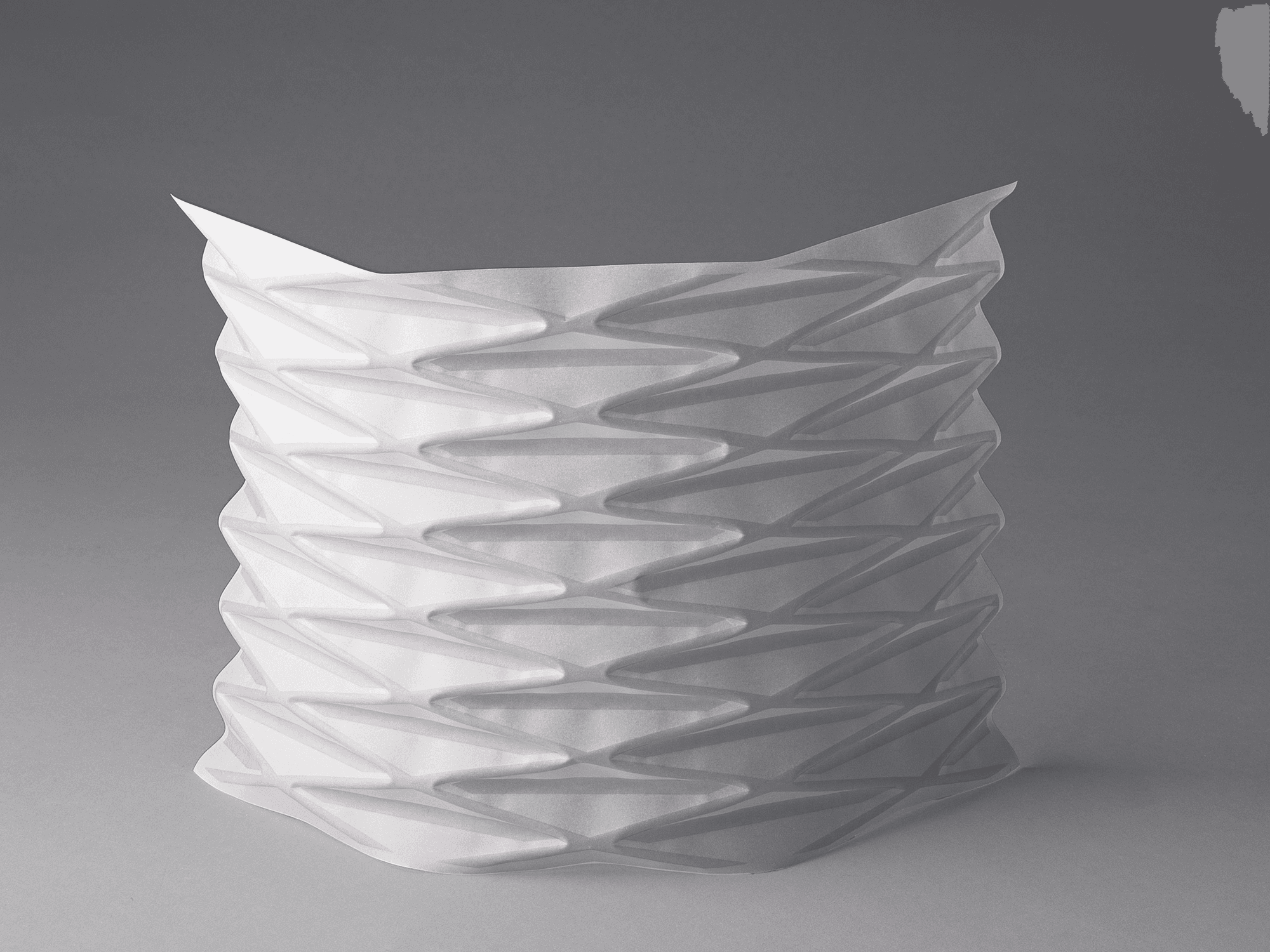
How a thing behaves because of what it's made of. Paper creases, glass carries light through its edge, steel resists until it doesn't. A surface tells you whether it can be pushed before you touch it. Screens have none of this and imitate all of it, usually by borrowing the look of a material without the behavior that made the look mean anything.
Material.
I find myself taking things apart by looking at them. It isn't the object so much as the decision underneath it: what had to be true for this to end up in this shape. It happens whether or not I'm working, and I write down more of it than I ever use. Three things I keep taking.

Everything alive is mid-process. A fern uncurling, a wing folding along creases that decide how it will open, a hand closing. Interfaces are almost entirely transitions now, and our easing curves come from physics that describes falling objects. Growth moves differently. Expansion and collapse have been solved thousands of times over in places we haven't looked.
Motion.
Sequence, mostly. A building controls what you see, from where, and in what order. An approach, a threshold, then a volume. Interfaces deliver everything at once, and there's a great deal we've never taken from the alternative: compression and release, restriction and reveal, the withholding of the whole until you've moved through something to reach it.
Architecture.
How a thing behaves because of what it's made of. Paper creases, glass carries light through its edge, steel resists until it doesn't. A surface tells you whether it can be pushed before you touch it. Screens have none of this and imitate all of it, usually by borrowing the look of a material without the behavior that made the look mean anything.
Material.
Everything alive is mid-process. A fern uncurling, a wing folding along creases that decide how it will open, a hand closing. Interfaces are almost entirely transitions now, and our easing curves come from physics that describes falling objects. Growth moves differently. Expansion and collapse have been solved thousands of times over in places we haven't looked.
Motion.
Sequence, mostly. A building controls what you see, from where, and in what order. An approach, a threshold, then a volume. Interfaces deliver everything at once, and there's a great deal we've never taken from the alternative: compression and release, restriction and reveal, the withholding of the whole until you've moved through something to reach it.
Architecture.
How a thing behaves because of what it's made of. Paper creases, glass carries light through its edge, steel resists until it doesn't. A surface tells you whether it can be pushed before you touch it. Screens have none of this and imitate all of it, usually by borrowing the look of a material without the behavior that made the look mean anything.
Material.
I didn't come into this through design. I started at Zain Kuwait managing the CMS, which in practice meant deciding the information architecture of every new page, working with the technical team about what the platform could do, and sitting with graphic designers to work out how visuals should behave across viewports. I thought I was doing operations. A manager told me it was design. One of the last things I built there was a chatbot, which turned out to be the beginning of the thread I'm still following.
Then a move to Saudi Arabia, and more than three years at Aramco: first in AI, then in downstream, designing operational systems for critical infrastructure. A complete change of industry with the subject matter intact.
On my own time I build concepts I want to exist. Most recently an app for the Guggenheim Abu Dhabi, using computer vision to shape how visitors move through and understand a collection.
Away from the screen I translate, write poetry, bake things more ambitious than my skill supports, and hunt for antique Persian rugs.

I'm between things at the moment, and open to the right thing.
HOW I GOT HERE
HOW I GOT HERE
Before I left Kuwait, one of the last things I designed was the platform for Zain's Great Idea program. I spent weeks with the manager who ran it, learning how young founders would pitch, how winners would be funded, and what the program put them through along the way. Part of it was a trip to LEAP, the technology conference in Riyadh that draws a couple of hundred thousand people a year. I'd never heard of it.
I didn't come into this through design. I started at Zain Kuwait managing the CMS, which in practice meant deciding the information architecture of every new page, working with the technical team about what the platform could do, and sitting with graphic designers to work out how visuals should behave across viewports. I thought I was doing operations. A manager told me it was design. One of the last things I built there was a chatbot, which turned out to be the beginning of the thread I'm still following.
Then a move to Saudi Arabia, and more than three years at Aramco: first in AI, then in downstream, designing operational systems for critical infrastructure. A complete change of industry with the subject matter intact.
I didn't come into this through design. I started at Zain Kuwait managing the CMS, which in practice meant deciding the information architecture of every new page, working with the technical team about what the platform could do, and sitting with graphic designers to work out how visuals should behave across viewports. I thought I was doing operations. A manager told me it was design. One of the last things I built there was a chatbot, which turned out to be the beginning of the thread I'm still following.
Then a move to Saudi Arabia, and more than three years at Aramco: first in AI, then in downstream, designing operational systems for critical infrastructure. A complete change of industry with the subject matter intact.
On my own time I build concepts I want to exist. Most recently an app for the Guggenheim Abu Dhabi, using computer vision to shape how visitors move through and understand a collection.
Away from the screen I translate, write poetry, bake things more ambitious than my skill supports, and hunt for antique Persian rugs.
I'm between things at the moment, and open to the right thing.
THREE MOMENTS
THREE MOMENTS
LEAP 2024. A year later I was there myself, for the announcement of a product I had designed: Metabrain, Aramco's first large language model.


Before I left Kuwait, one of the last things I designed was the platform for Zain's Great Idea program. I spent weeks with the manager who ran it, learning how young founders would pitch, how winners would be funded, and what the program put them through along the way. Part of it was a trip to LEAP, the technology conference in Riyadh that draws a couple of hundred thousand people a year. I'd never heard of it.
LEAP 2024. A year later I was there myself, for the announcement of a product I had designed: Metabrain, Aramco's first large language model.
LEAP 2025. The following year, another platform I designed was announced: Plant Metabrain, built for model training and inferencing.
LEAP 2025. The following year, another platform I designed was announced: Plant Metabrain, built for model training and inferencing.
CNBC, November 2025. The operations network I designed appeared in a segment filmed inside the control center, with the CEO walking a reporter through the room.
CNBC, November 2025. The operations network I designed appeared in a segment filmed inside the control center, with the CEO walking a reporter through the room.
Before the
first
n
te
Every project starts the same way, whatever it is. Some mixture of excitement and pressure that I've never fully separated, and a lot of noise before there's any shape to it. It reminds me of an orchestra tuning: everyone sounding their own note, nothing agreeing yet, the room getting louder before it gets quiet. I've learned to like that part. It's the only stretch where everything is still possible.
I start with a pencil and paper, before anything is on a screen. Mostly I'm breaking the problem apart and asking questions: what if, what happens when, what does this do in the state nobody planned for. Some of those go to the client, some to the engineers for feasibility, and some I ask myself, because they tend to open flows I hadn't seen. When a question has no answer yet, I propose something anyway and let time settle it. Not every uncertainty resolves in a meeting.
Then structure. What each page is for, what someone can do there, what it owes them. Once there's a skeleton, I start on identity, and I usually get there through language before form: what the product should sound like, the words it would use, the voice underneath it. The visual direction comes out of that rather than the other way around.
A lot of exploration happens early. Walk into one of my files in the first weeks and it looks like a room lined with boards: options pinned everywhere, versions of everything, connections drawn between things that may or may not turn out to be related. Every project wants a different shape and I don't trust the one that worked last time, so I map until something holds. Most of my work is dense, with hard constraints and a high volume of information, which means a lot of trimming and layering. Only once the structure and the vision have settled do I start building components and clearing the room.
I show it to people early and often, insiders and outsiders both. You can be too far inside a problem to see it, and I've solved things in the middle of explaining them out loud that I couldn't solve alone in my head.
Then it snaps. Two things fitting together and locking. The complicated parts stop arguing with each other and the whole thing goes quiet, and I know it's finished, at least for now.
HOW I WORK
HOW I WORK
Design as celebration
I think this feeling is older than design. Before we had names for disciplines, someone pressed a thumb into clay. Someone pulled thread through cloth. Someone struck a surface until it made sound. The body found a way to leave thought behind.
Maybe celebration began there. In the proof that we could take what lived inside us and give it form.
That is what design gives me. A way to meet the world with my hands still open. A way to turn attention into structure, feeling into movement, and an empty screen into evidence that something passed through me and stayed.
To make is to say: I was here, and while I was here, I tried to give the world another shape.
التصميم بوصفه احتفاءً
ما يدفعنا إلى الخلق أقدم من كل اسم أطلقناه عليه. قبل أن نمنح التخصصات أسماءها، غرس أحدهم إبهامه في الطين، ومرّر أحدهم خيطًا في قماش. وطرق أحدهم سطحًا حتى أصدر صوتًا. وجد الجسد طريقة يترك بها أثر الفكرة خلفه.
لربما بدأ الاحتفال هناك. في البرهان على أننا نستطيع أن نأخذ ما يسكننا فنمنحه شكلًا.
هذا ما يمنحني إياه التصميم. طريقة ألقى بها العالم ويداي ما زالتا مفتوحتين. طريقة أحوّل بها الانتباه إلى بنية، والشعور إلى حركة، والشاشة الفارغة إلى دليل على أن شيئًا مرّ بي وبقي.
أن تصنع يعني أن تقول: كنتُ هنا، وما دمتُ هنا، حاولت أن أمنح العالم شكلًا آخر.
Before the first
Before the first
N
te
te
Every project starts the same way, whatever it is. Some mixture of excitement and pressure that I've never fully separated, and a lot of noise before there's any shape to it. It reminds me of an orchestra tuning: everyone sounding their own note, nothing agreeing yet, the room getting louder before it gets quiet. I've learned to like that part. It's the only stretch where everything is still possible.
I start with a pencil and paper, before anything is on a screen. Mostly I'm breaking the problem apart and asking questions: what if, what happens when, what does this do in the state nobody planned for. Some of those go to the client, some to the engineers for feasibility, and some I ask myself, because they tend to open flows I hadn't seen. When a question has no answer yet, I propose something anyway and let time settle it. Not every uncertainty resolves in a meeting.
Then structure. What each page is for, what someone can do there, what it owes them. Once there's a skeleton, I start on identity, and I usually get there through language before form: what the product should sound like, the words it would use, the voice underneath it. The visual direction comes out of that rather than the other way around.
I didn't come into this through design. I started at Zain Kuwait managing the CMS, which in practice meant deciding the information architecture of every new page, working with the technical team about what the platform could do, and sitting with graphic designers to work out how visuals should behave across viewports. I thought I was doing operations. A manager told me it was design. One of the last things I built there was a chatbot, which turned out to be the beginning of the thread I'm still following.
Then a move to Saudi Arabia, and more than three years at Aramco: first in AI, then in downstream, designing operational systems for critical infrastructure. A complete change of industry with the subject matter intact.
A lot of exploration happens early. Walk into one of my files in the first weeks and it looks like a room lined with boards: options pinned everywhere, versions of everything, connections drawn between things that may or may not turn out to be related. Every project wants a different shape and I don't trust the one that worked last time, so I map until something holds. Most of my work is dense, with hard constraints and a high volume of information, which means a lot of trimming and layering. Only once the structure and the vision have settled do I start building components and clearing the room.
I show it to people early and often, insiders and outsiders both. You can be too far inside a problem to see it, and I've solved things in the middle of explaining them out loud that I couldn't solve alone in my head.
Then it snaps. Two things fitting together and locking. The complicated parts stop arguing with each other and the whole thing goes quiet, and I know it's finished, at least for now.
WHAT IT'S ALL FOR
WHAT IT'S ALL FOR
Design as celebration
Design as celebration
I think this feeling is older than design. Before we had names for disciplines, someone pressed a thumb into clay. Someone pulled thread through cloth. Someone struck a surface until it made sound. The body found a way to leave thought behind.
Maybe celebration began there. In the proof that we could take what lived inside us and give it form.
That is what design gives me. A way to meet the world with my hands still open. A way to turn attention into structure, feeling into movement, and an empty screen into evidence that something passed through me and stayed.
To make is to say: I was here, and while I was here, I tried to give the world another shape.
التصميم بوصفه احتفاءً
التصميم بوصفه احتفاءً
ما يدفعنا إلى الخلق أقدم من كل اسم أطلقناه عليه. قبل أن نمنح التخصصات أسماءها، غرس أحدهم إبهامه في الطين، ومرّر أحدهم خيطًا في قماش. وطرق أحدهم سطحًا حتى أصدر صوتًا. وجد الجسد طريقة يترك بها أثر الفكرة خلفه.
لربما بدأ الاحتفال هناك. في البرهان على أننا نستطيع أن نأخذ ما يسكننا فنمنحه شكلًا.
هذا ما يمنحني إياه التصميم. طريقة ألقى بها العالم ويداي ما زالتا مفتوحتين. طريقة أحوّل بها الانتباه إلى بنية، والشعور إلى حركة، والشاشة الفارغة إلى دليل على أن شيئًا مرّ بي وبقي.
أن تصنع يعني أن تقول: كنتُ هنا، وما دمتُ هنا، حاولت أن أمنح العالم شكلًا آخر.

Happy you're still here
LET’S Connect
